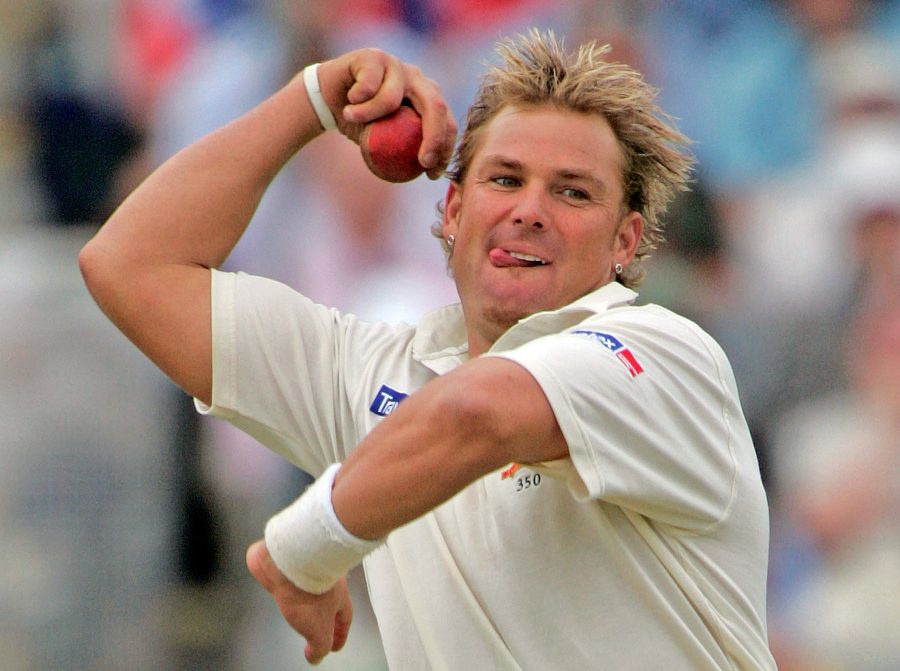
A googly is one of the most deceptive deliveries in cricket. It is a special variation used by a leg-spin bowler to surprise the batter by turning the ball in the opposite direction to a normal leg break.
For a right-arm leg spinner bowling to a right-handed batter, a normal leg break turns from leg to off. A googly turns from off to leg, moving towards the batter after pitching.
The delivery can look like a conventional leg break when it leaves the bowler’s hand. However, its different spin direction can beat the batter’s shot, hit the stumps or create an opportunity for a catch.
Great wrist spinners such as Shane Warne, Abdul Qadir and Adil Rashid have used the googly to trouble international batters. Each developed a different way to disguise the delivery and make it difficult to read.
This guide explains what a googly ball is, how it works, how to bowl it and which players have used it most effectively.
What Is a Googly Ball in Cricket?
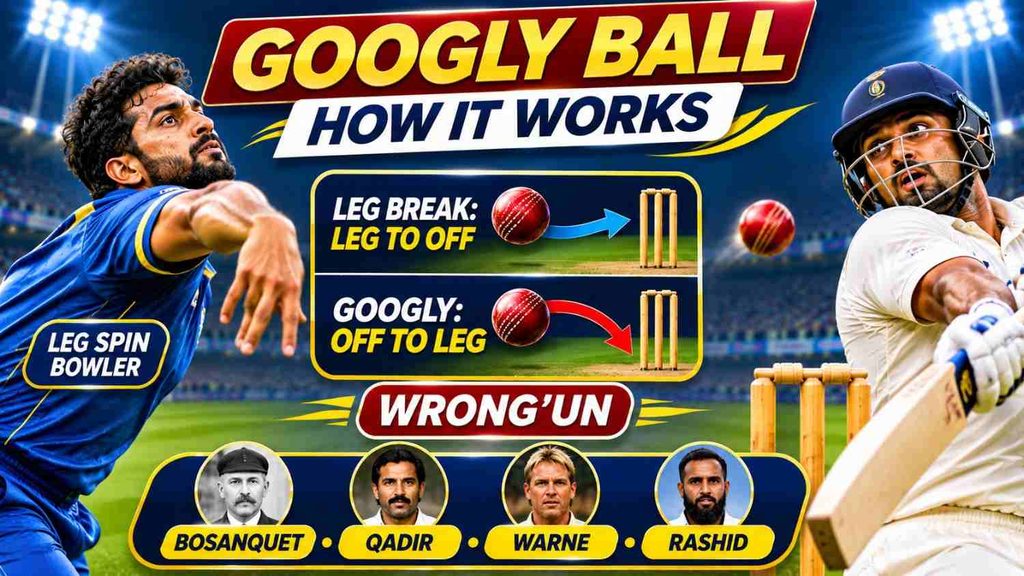
A googly is a leg-spin variation that turns in the opposite direction to a normal leg break. It is also known as a wrong’un or bosie.
For a right-arm leg spinner bowling to a right-handed batter:
- A normal leg break turns from leg to off.
- A googly turns from off to leg.
- The googly moves towards the batter after pitching.
For a left-handed batter, the direction of movement is reversed.
This opposite movement creates uncertainty. The batter may prepare to play a normal leg break but discover that the ball is turning towards the body or stumps.
A googly is generally bowled with a similar run-up and arm action to a leg break. The main difference comes from the wrist position, finger action and release technique.
How Does a Googly Ball Work?
A googly works through a combination of wrist rotation, finger action and release technique. The bowler changes the position of the wrist and hand to produce spin in the opposite direction to a normal leg break.
A right-arm leg spinner normally releases a leg break using a wrist and finger position that creates spin from leg to off for a right-handed batter. For a googly, the bowler rotates the wrist into a different position to generate the opposite spin.
A common technique involves turning the wrist further so that the back of the hand faces towards the batter at the point of release. However, the exact hand position can vary between bowlers.
The wrist and fingers work together to generate the required rotation while the bowler tries to maintain a similar overall bowling action. When the ball lands, it turns towards a right-handed batter instead of away from them.
The result depends on several factors:
- Wrist position: The wrist rotates into the position needed to create the opposite spin.
- Finger control: The fingers help control the release and generate the required revolutions.
- Release point: A consistent release helps disguise the variation.
- Flight and pace: Changes in speed and trajectory can make the ball harder to read.
- Accuracy: The bowler needs to land the ball in a useful area rather than focusing only on spin.
The googly is difficult because the bowler must produce a different spin direction without giving the batter an obvious warning.
Googly vs Leg Break: What Is the Difference?
Both deliveries come from a leg-spin bowler, but they turn in opposite directions.
| Feature | Leg Break | Googly |
| Bowling style | Wrist spin | Wrist spin |
| Direction for a right-handed batter | Leg to off | Off to leg |
| Main purpose | Turn away from the batter | Turn into the batter |
| Wrist position | Conventional leg-spin release | Different wrist and hand position at release |
| Batter’s challenge | Judge the amount of turn | Identify the unexpected direction |
| Alternative name | Leg break | Wrong’un or bosie |
The main difference is the direction of turn. A batter who reads the bowler’s wrist and hand position correctly can identify the variation. However, a well-disguised googly can make that decision difficult.
For a left-handed batter, the direction of movement is reversed.
How to Bowl a Googly Ball: Step by Step
Learning a googly requires patience. Beginners should first develop a reliable leg break before adding this variation.
1. Start With the Leg-Spin Grip
Hold the cricket ball with the index and middle fingers positioned around the seam. Keep the grip comfortable rather than squeezing the ball tightly.
The ring finger also plays an important role in controlling the release and helping generate spin. The thumb can rest lightly on the ball for support.
Grip arrangements can vary between bowlers, so focus on a comfortable position that allows you to control the ball.
2. Practise the Wrist Position
Turn the wrist into the position needed to produce the opposite spin to a normal leg break. A common googly technique involves showing more of the back of the bowling hand towards the batter at the point of release.
Do not force the wrist into an uncomfortable position. Develop flexibility through controlled practice.
3. Focus on Finger Rotation
Use the fingers together with the wrist to control the release and generate spin in the opposite direction.
The ball should leave the hand with a clear rotation rather than simply travelling towards the batter. Start with short distances to understand how the ball behaves.
4. Keep the Bowling Action Similar
A googly becomes more effective when the batter cannot easily identify it before release.
Try to maintain a similar run-up, arm speed and body position to your normal leg break. Avoid making a large change in your action.
5. Practise Accuracy
A googly that spins sharply but lands too far outside the batter’s reach may not create a useful opportunity.
Aim around the off stump or just outside it. Adjust the line and length according to the batter and pitch conditions.
6. Use Simple Training Drills
Practise the delivery in short sessions:
- Bowl a few leg breaks to establish your normal action.
- Bowl googlies from a standing position to understand the wrist movement.
- Move to a short run-up and focus on a consistent release.
- Alternate between leg breaks and googlies.
- Ask a coach or wicketkeeper to check whether the batter can identify the variation.
Do not rush to bowl the googly in a match. Control and disguise matter more than the number of variations in a bowler’s collection.
Who Invented the Googly in Cricket?
English cricketer Bernard Bosanquet is widely credited with developing and popularising the googly.
Bosanquet first experimented with the delivery using a tennis ball during a table game called Twisti-Twosti around 1897. He later progressed to practising the technique with a cricket ball around 1899.
The delivery received public recognition during a Middlesex match against Leicestershire at Lord’s in July 1900. Bosanquet later used it in international cricket, including against Australia in 1902 and during England’s 1903–04 tour of Australia.
The googly became known as a revolutionary variation because it allowed a leg-spin bowler to produce an off-break while using a leg-spin action.
Bosanquet’s invention changed the possibilities of wrist-spin bowling. Later generations developed the delivery into a major weapon in international cricket.
Who Bowled the Googly Best?
There is no official ranking for the best googly bowler. Cricket statistics record wickets, runs and other match information, but they do not provide a separate career total for wickets taken specifically with a googly.
However, several bowlers deserve recognition for their skill and influence.
| Bowler | Country | Why They Are Remembered |
| Bernard Bosanquet | England | Developed and popularised the googly |
| Abdul Qadir | Pakistan | Helped revive attacking wrist spin and made the googly a major weapon |
| Shane Warne | Australia | Used deception, drift and variations to trouble top batters |
| Mushtaq Ahmed | Pakistan | Known for his control and deceptive wrist spin |
| Anil Kumble | India | Developed and used a googly variation alongside his other deliveries |
| Adil Rashid | England | Combines a deceptive googly with a strong leg break and other variations |
Shane Warne
Shane Warne is one of the strongest candidates when discussing the greatest googly bowlers. His ability to disguise variations made him difficult to attack.
Warne finished his Test career with 708 wickets. His famous delivery to Mike Gatting in 1993, known as the Ball of the Century, was a leg break rather than a googly. It nevertheless demonstrated his extraordinary control of wrist spin.
Abdul Qadir
Abdul Qadir played a major role in bringing attacking leg spin back into the spotlight. His wrist spin, flight and variations troubled batters across different conditions.
He finished his Test career with 236 wickets. His influence also extended to later generations of Pakistani and international wrist spinners.
Adil Rashid
Adil Rashid is a prominent modern example. He uses the leg break, googly, top spinner and slider to keep batters uncertain.
His googly is particularly effective because he can maintain a similar pace and action across different deliveries. This makes it harder for batters to identify the ball before it reaches them.
Current status as of 27 November 2026: Rashid remains an active England white-ball international and is part of England’s squad touring Australia.
In the second T20I against Australia at Carrara Oval on 24 November 2026, he took 1/26 from four overs, dismissing Lachlan Shaw. England’s third T20I against Australia was scheduled for 27 November at the Gabba, with the match scheduled to begin at 1:45 PM IST.
His 24 November performance is therefore described as his latest completed international appearance before the scheduled third T20I, rather than as a permanent latest-match record.
Anil Kumble
Anil Kumble developed a googly variation during his career and used it alongside his other deliveries. He discussed developing the variation with a tennis ball before using it with a cricket ball.
His bowling approach relied heavily on accuracy, changes in spin and careful use of variations.
Verdict: Shane Warne is one of the strongest candidates for the best overall combination of skill, deception and impact. Abdul Qadir deserves special recognition for his influence on modern leg spin, while Adil Rashid represents the modern use of the variation. Anil Kumble also deserves recognition for developing and using the delivery. The answer remains subjective because there is no separate official googly record.
When Should a Bowler Use a Googly?
A googly is most effective when the batter expects a normal leg break. Using it too frequently can make the variation easier to recognise.
A leg spinner can consider using a googly in these situations:
- When a right-handed batter is repeatedly playing for the ball to turn away.
- When the batter moves forward to attack a flighted delivery.
- When the bowler wants to target the stumps.
- When a batter has settled against the normal leg break.
- When the pitch offers enough grip to create useful turn.
The bowler should also consider the batter’s strengths, the match situation and the condition of the pitch.
Conclusion
The googly is one of the most effective variations in leg-spin bowling. It turns in the opposite direction to a normal leg break and forces batters to rethink their shot after the ball pitches.
Bernard Bosanquet is widely credited with developing the delivery, while bowlers such as Abdul Qadir, Shane Warne and Adil Rashid helped make it an important part of modern cricket. Anil Kumble also developed and used his own googly variation.
For aspiring leg spinners, the key is to master the basic leg break first. A consistent action, correct wrist position, finger control and accurate line and length can turn the googly into a genuine wicket-taking option.
Frequently Asked Questions About Googly Ball
A googly is a leg-spin variation that turns in the opposite direction to a normal leg break. A right-arm leg spinner’s googly turns from off to leg for a right-handed batter.
Bernard Bosanquet of England is widely credited with inventing and popularising the googly. He experimented with a tennis ball around 1897 and later brought the delivery into public recognition in first-class cricket in 1900.
Yes. Googly and wrong’un are two names for the same leg-spin variation. It turns in the opposite direction to a normal leg break. It is also known as a bosie.
A googly is difficult because it can look like a normal leg break before release but turn in the opposite direction after pitching. This can cause the batter to choose the wrong shot.
Shane Warne is one of the leading candidates because of his control, deception and impact as a wrist spinner. Abdul Qadir, Adil Rashid and Anil Kumble are also notable practitioners. There is no official ranking based on googly wickets alone.