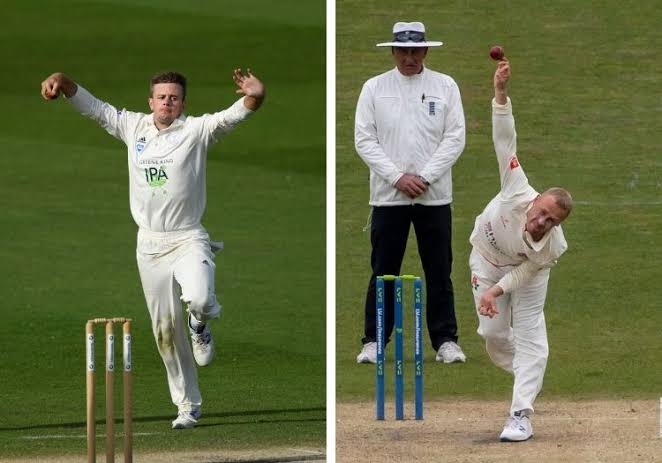
Leg spin and off spin are two major types of spin bowling in cricket. Both aim to deceive batters through flight, turn, bounce and changes of pace. However, they use different bowling techniques and produce different directions of spin. The main difference between leg spin and off spin is how the bowler imparts rotation on the ball and which way the delivery turns after pitching.
A right-arm off-spinner usually turns the ball into a right-handed batter, while a right-arm leg-spinner turns it away. This difference can influence a batter’s footwork, shot selection and chances of getting out. Understanding these styles also makes it easier to recognise variations such as the googly, doosra, arm ball and carrom ball.
Leg Spin vs Off Spin: Key Differences
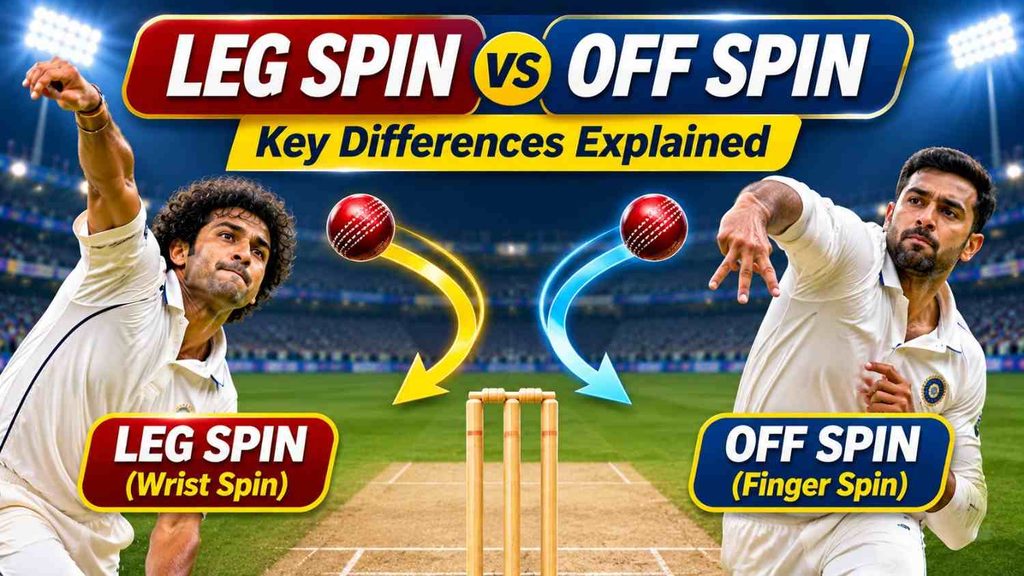
The biggest difference between leg spin and off spin is the bowling technique and the direction of the stock delivery. Off spin mainly uses finger spin, while leg spin mainly uses wrist spin.
| Feature | Leg Spin | Off Spin |
| Main technique | Wrist spin | Finger spin |
| Main delivery | Leg break | Off break |
| Right-arm bowler against right-handed batter | Turns away | Turns into the batter |
| Right-arm bowler against left-handed batter | Turns into the batter | Turns away |
| Common variation | Googly | Doosra |
| Other variations | Slider, flipper, topspinner | Arm ball, topspinner |
| Famous bowlers | Shane Warne, Anil Kumble, Abdul Qadir | Muttiah Muralitharan, Ravichandran Ashwin, Harbhajan Singh |
The turning directions in this table describe the usual stock deliveries from right-arm bowlers. Left-arm orthodox and left-arm wrist spinners have different stock deliveries and turning directions.
The carrom ball is another spin-bowling variation. It is not exclusive to conventional off-spin bowling and is therefore discussed separately below.
What Is Leg Spin in Cricket?
Leg spin is a type of wrist-spin bowling. A right-arm leg-spinner uses the wrist and fingers to impart rotation on the ball. The main delivery is called a leg break.
A leg break turns from the leg side towards the off side of a right-handed batter after pitching. This movement takes the ball away from the batter’s body and can create opportunities for an outside edge.
Leg spin is known for its variations. A skilled bowler can change the direction, pace, flight and bounce of the ball without making the difference obvious to the batter.
How Does a Leg Spinner Grip the Ball?
A leg-spinner generally holds the ball with the index and middle fingers positioned around the seam. The ring finger plays an important role in imparting spin, while the wrist helps control the release.
The grip should allow the bowler to rotate the ball without holding it too tightly. Timing, finger pressure and wrist position are important. Small changes in the release can produce different deliveries.
Grip techniques can vary between bowlers. The main objective is to generate the required rotation while maintaining control over the line, length and flight.
Famous Leg Spin Bowlers
Some of cricket’s most celebrated bowlers have used leg spin.
Shane Warne: The Australian legend took 708 Test wickets. His control, flight and variations made him one of the greatest leg spinners in cricket history.
Anil Kumble: The Indian spinner finished his Test career with 619 wickets. He was known for accuracy, bounce and his ability to trouble batters even without excessive turn.
Abdul Qadir: The Pakistan great helped bring attacking leg spin back into prominence. His googly and other variations influenced several generations of spin bowlers.
What Is Off Spin in Cricket?
Off spin is a type of finger-spin bowling. A right-arm off-spinner mainly uses the fingers to rotate the ball and produce an off break.
The stock delivery turns from the off side towards the leg side of a right-handed batter. It therefore moves into the batter after pitching.
Off-spinners often focus on accuracy, changes of pace and consistent pressure. They can bowl at different speeds and use flight to encourage batters to play attacking shots.
How Does an Off Spinner Grip the Ball?
An off-spinner usually places the index and middle fingers across or close to the seam. The fingers apply pressure during release to create rotation.
The wrist and other fingers also support the action. The bowler uses finger movement and wrist position to control the amount of spin, direction and flight.
A good off-spinner does not simply try to turn the ball as much as possible. Accuracy, bounce and changes in pace are equally important.
Famous Off Spin Bowlers
Several legendary players have made off spin one of the most successful bowling styles in cricket.
Muttiah Muralitharan: The Sri Lankan spinner holds the record for the most Test wickets, with 800. His variations, including the doosra, made him difficult to read.
Ravichandran Ashwin: The former India international spinner retired from international cricket in December 2024 with 537 Test wickets. He used changes in pace, flight and spin to outthink batters.
Harbhajan Singh: The Indian off-spinner claimed 417 Test wickets. His famous performances included a hat-trick against Australia in 2001.
Leg Spin vs Off Spin: Bowling Variations
Both bowling styles have several variations. These deliveries help spinners surprise batters who expect the stock ball to turn in a particular direction.
Leg Spin Variations
Googly: A googly is the opposite-turning delivery of a right-arm leg-spinner. Instead of turning away from a right-handed batter like a conventional leg break, it turns into the batter.
Topspinner: A topspinner has forward rotation. It generally dips more during flight and can produce additional bounce after pitching. It is designed to make the batter misjudge the length and bounce.
Slider: A slider is released to skid through with less expected turn. It can deceive a batter who prepares for a conventional leg break.
Flipper: A flipper is released with a distinctive squeezing or flicking action that produces backspin. It can skid through with relatively low bounce and behave differently from a conventional leg break.
Off Spin Variations
Doosra: A doosra is designed to turn in the opposite direction to a right-arm off-spinner’s stock off break. It generally moves away from a right-handed batter. The doosra is a recognised bowling variation, but its legality depends on the bowler’s action.
Under ICC regulations, a bowling action is illegal when the elbow extends by more than 15 degrees between the bowling arm reaching the horizontal position and the ball being released. This rule applies to bowling actions generally, not just the doosra. A bowler can deliver a legal doosra if the action meets the regulations.
Arm Ball: An arm ball is a variation bowled by an off-spinner or left-arm orthodox spinner. It is intended to go straight on after pitching rather than turn significantly. It can also drift through the air and surprise a batter expecting the stock spin delivery.
Topspinner: An off-spinner can also use topspin to produce extra dip during flight and additional bounce after pitching. This makes it harder for a batter to judge the length.
Other Spin Bowling Variation
Carrom Ball: The carrom ball is released by flicking the ball out of the front of the hand, using the fingers to generate rotation. It is a variation used by spinners and is not exclusive to conventional off-spin bowling. Its direction and movement depend on the bowler’s grip and release. It can be particularly effective against right-handed batters.
Which Is More Difficult: Leg Spin or Off Spin?
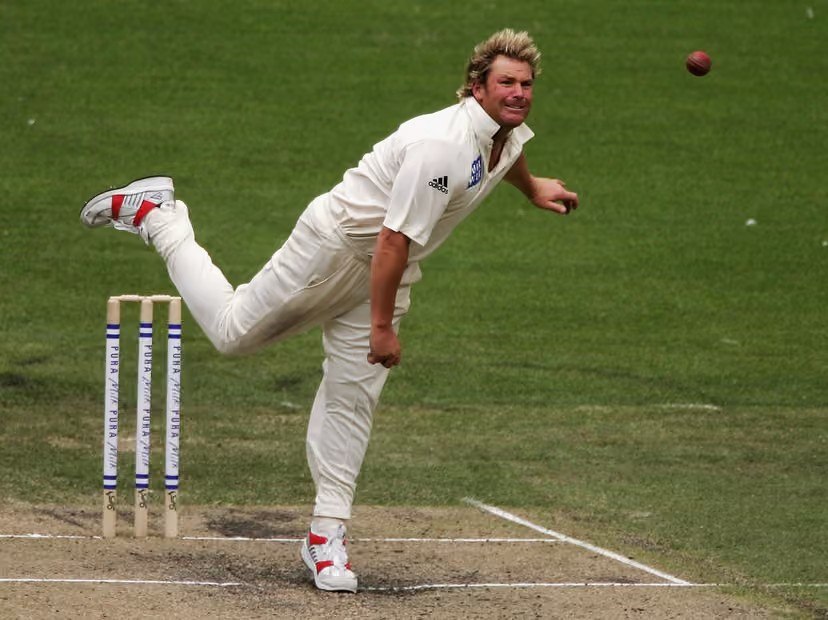
Leg spin is generally considered more difficult to master because it requires precise wrist control and a consistent release. A small change in wrist position can affect the direction, flight and amount of turn.
Off spin is often easier for beginners to develop because finger spin can provide a more repeatable release. However, that does not make it easy to bowl effectively at a high level.
Both styles require accuracy, control, patience and an understanding of the batter. A leg-spinner who cannot control their length may give away boundaries. An off-spinner who bowls too predictably can also become easy to attack.
The best bowlers combine their stock delivery with variations and smart changes in pace.
Leg Spin vs Off Spin: Which Is More Effective?
Neither style is automatically better. Their effectiveness depends on the pitch, match format, batter’s handedness, field placement and the bowler’s skill.
A 2025 study published in the European Journal of Sport Science by Kerruish and colleagues analysed 23,084 deliveries from elite spin bowlers across six T20 competitions.
The study found that deliveries that naturally turned away from the batter were particularly effective at restricting runs against both right-handed and left-handed batters. It also found that right-arm leg spinners were more likely to dismiss right-handed batters.
The research highlighted the effectiveness of googlies and carrom balls against right-handed batters. These variations were particularly useful for restricting runs and taking wickets in the analysed T20 matches.
The study also had limitations. It focused on elite T20 cricket, so its findings should not automatically be applied to Test or ODI cricket. Some less frequently used variations, including the doosra, flipper, slider and topspinner, were excluded from the final analysis because they appeared in fewer than 1% of the original deliveries.
This research highlights why captains consider batter handedness when choosing a spinner. However, it does not prove that one bowling style is always superior.
Leg Spin in Test, ODI and T20 Cricket
Leg spin can be especially threatening when a bowler has enough control to use flight, turn and variations.
In Test cricket, a leg-spinner can attack with catching fielders around the bat. On turning pitches, the combination of bounce and spin can create difficult chances for batters.
In ODIs and T20s, googlies, sliders and changes of pace can create mistakes from batters looking to score quickly. Leg spinners can also target specific batter matchups.
Off Spin in Test, ODI and T20 Cricket
Off spin can build pressure through accuracy and consistent lines.
In Test cricket, it can exploit a turning pitch and challenge batters over long spells. In limited-overs cricket, an off-spinner can restrict scoring by controlling the middle overs and targeting specific batter matchups.
Variations such as the arm ball and doosra can also make it harder for batters to predict the direction of the delivery.
Famous Leg Spin and Off Spin Records
The following table compares the Test wicket records of some leading leg spinners and off spinners. These are completed career totals.
| Bowler | Country | Bowling style | Test wickets |
| Muttiah Muralitharan | Sri Lanka | Off spin | 800 |
| Shane Warne | Australia | Leg spin | 708 |
| Anil Kumble | India | Leg spin | 619 |
| Ravichandran Ashwin | India | Off spin | 537 |
| Harbhajan Singh | India | Off spin | 417 |
| Abdul Qadir | Pakistan | Leg spin | 236 |
Muralitharan leads the list with 800 Test wickets, while Warne is the leading leg-spinner in this comparison with 708. These figures show the impact both styles have had on international cricket.
Nathan Lyon’s Latest Test Record and Selection Status
Among active off-spinners, Australia’s Nathan Lyon had taken 577 Test wickets in 145 matches as of 27 November 2026.
The 39-year-old remained an active international cricketer and had not announced his retirement. However, his immediate Test future was under scrutiny.
Reports published on 26 and 27 November 2026 indicated that Lyon was expected to be omitted from Australia’s squad for the upcoming home Test series opener against New Zealand in Perth. The official squad announcement was scheduled for Saturday, 28 November 2026.
This was a reported selection development, not a confirmed retirement announcement. His status should be updated after Cricket Australia publishes the official squad.
Conclusion
Leg spin and off spin are both important parts of cricket, but they rely on different techniques and create different challenges for batters. Leg spin uses wrist action to produce deliveries such as the leg break and googly, while off spin relies mainly on finger action to produce the off break and variations such as the doosra and arm ball.
Neither style guarantees success. Accuracy, control, flight, variation and the ability to read a batter are what make a spinner effective. Research into elite T20 cricket also highlights the importance of bowling variations and batter matchups.
Understanding the difference between leg spin and off spin helps players improve their skills and gives fans a better understanding of the tactics behind every delivery.
Frequently Asked Questions
Leg spin mainly uses wrist spin, and its stock delivery turns away from a right-handed batter when bowled by a right-arm bowler. Off spin mainly uses finger spin and turns into a right-handed batter.
Neither is always better. Leg spin offers variations such as the googly and slider, while off spin provides variations such as the doosra and arm ball. Pitch conditions, match format and batter matchups influence their effectiveness.
Shane Warne is widely regarded as one of the greatest leg spinners. He took 708 Test wickets for Australia and became famous for his control, turn and variations.
Muttiah Muralitharan is widely regarded as one of the greatest off spinners. He holds the Test record with 800 wickets for Sri Lanka.
A googly is a leg-spinner’s opposite-turning delivery. A doosra is an off-spinner’s opposite-turning variation. Both are designed to move differently from the bowler’s usual stock delivery.