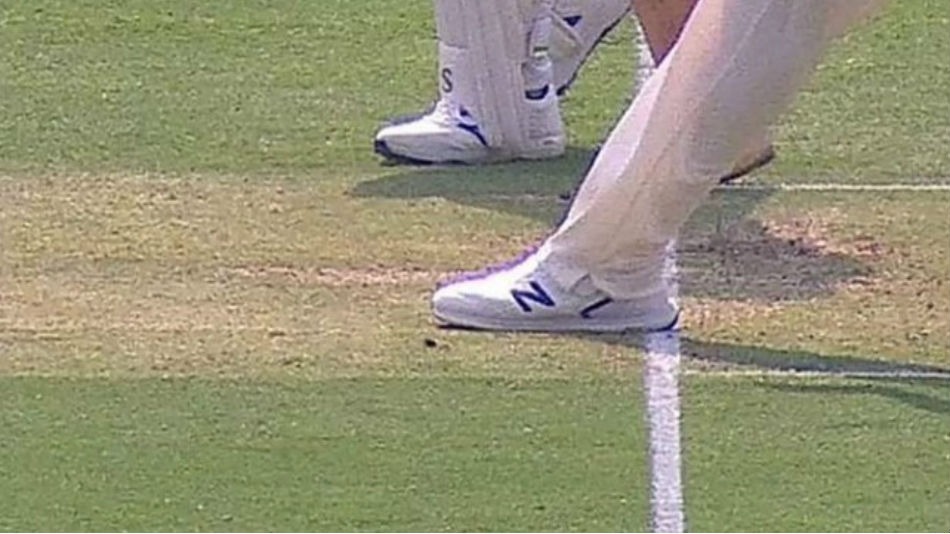
A no ball in cricket is an illegal delivery called by the umpire when the bowler or fielding team breaks a specific playing rule. It gives the batting side an extra run, doesn’t count as one of the six legal balls in an over, and can also give the batter a free hit in limited-overs cricket.
Several things can cause a bowler or fielder to commit a no ball. A bowler can overstep the crease, deliver an illegal high full toss, use an unfair bowling action or break a fielding restriction. Some no balls are less obvious because they involve the wicketkeeper or another fielder.
The rules are set out in the MCC Laws of Cricket 2017 Code, Fourth Edition (2026), with additional playing conditions for international and domestic competitions. This guide explains ten common categories of no-ball offences and highlights important rule updates introduced in 2026.
The ten categories are grouped for easier understanding. They are not an official MCC classification of exactly ten types.
What Is a No Ball in Cricket?
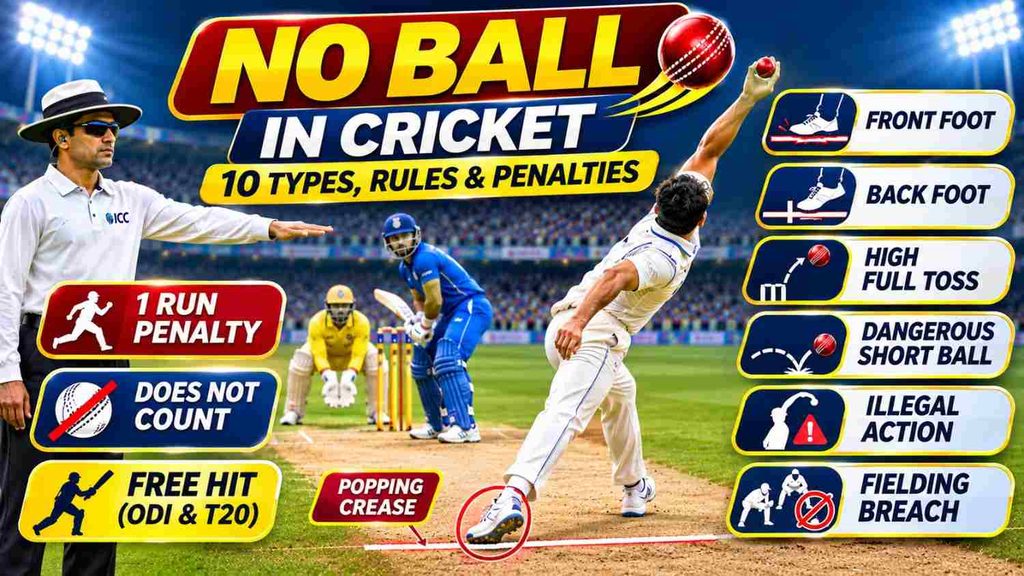
A no ball is a delivery that does not meet the requirements for fair bowling or breaks a relevant playing condition. The umpire calls it when the bowler or fielding side commits a specific offence.
The bowler’s-end umpire usually signals a no ball by extending one arm horizontally. The signal tells the scorers and players that the delivery is illegal.
A no ball has three important consequences:
- The batting team receives one penalty run.
- The delivery does not count as a legal ball in the over.
- In ODI and T20 cricket, the next delivery is a free hit under the relevant playing conditions.
The batting team can score additional runs from the delivery. These may come from the bat, running between the wickets or a boundary. The no-ball penalty is added separately.
All 10 Types of No Ball in Cricket
The following ten categories explain common situations that can result in a no ball. Some are separate offences under the MCC Laws, while others group related offences and competition-specific restrictions.
1. Front Foot No Ball
A front-foot no ball happens when the bowler fails to land the front foot correctly during the delivery stride.
For a legal delivery, some part of the front foot, whether grounded or raised, must land behind the popping crease. It must also land on the correct side of the imaginary line joining the two middle stumps.
If the bowler’s front foot lands entirely beyond the popping crease, the umpire calls a no ball.
This is one of the most familiar no-ball offences in cricket. Fast bowlers can overstep when trying to generate extra pace or when struggling to maintain a consistent run-up.
2026 update: Under the revised MCC Law 41.8, if the umpire considers a front-foot no ball deliberate, the bowler is immediately suspended from bowling for the remainder of the match. This is different from an accidental front-foot no ball, which does not automatically result in suspension.
2. Back Foot No Ball
A back-foot no ball occurs when the bowler’s back foot lands outside the permitted area near the return crease.
The back foot must land within the return crease connected to the bowler’s chosen bowling direction. It must not touch the return crease line.
If the bowler breaks this rule, the umpire calls a no ball.
Both front-foot and back-foot requirements form part of the rules for a fair delivery under Law 21.5.
3. High Full Toss No Ball
A high full toss is a delivery that reaches the batter without bouncing and passes above waist height.
Under Law 41.7, a delivery that passes or would have passed above waist height without pitching is unfair and must be called a no ball.
The umpire judges the height using the batter’s normal upright position at the popping crease. The top of the batter’s trousers provides the waist-height reference.
This rule protects batters from deliveries that give them very little time to react.
Important 2026 update: The penalty depends on whether the delivery is considered dangerous or deliberate.
- An ordinary high full toss is called a no ball.
- If the umpire considers a non-pitching delivery dangerous, the bowler receives a first and final warning. A further dangerous delivery in the same innings can result in suspension for the rest of that innings.
- If the umpire considers the high non-pitching delivery deliberate, the warning is skipped and the bowler is immediately suspended for the remainder of the match under the 2026 MCC Law.
A high full toss does not automatically mean the bowler is suspended. The umpire must apply the relevant criteria.
4. Ball Coming to Rest or Forcing the Batter Off the Pitch
Under Law 21.8, a no ball is called if a delivery causes the striker to leave the pitch to attempt to play it or comes to rest in front of the striker’s wicket without previously touching the bat or the batter.
When the ball comes to rest in front of the wicket without touching the bat or the striker, the umpire also calls Dead ball.
This rule prevents an unusual or unfair delivery from creating an advantage for the fielding side.
5. Dangerous Short-Pitched Delivery No Ball
Bowlers can use short-pitched deliveries as part of their normal strategy. However, a short ball can be called a no ball if the umpire considers it dangerous or unfair.
Under MCC Law 41.6, the umpire considers factors such as:
- The speed of the delivery.
- The length and height of the ball.
- Its direction.
- The skill of the batter.
- Whether the delivery is likely to cause physical injury.
Repeated short-pitched deliveries passing above the head height of a batter standing upright at the crease can also be considered unfair.
When the umpire decides that the bowling has become dangerous or unfair, the bowler receives a first and final warning. A further similar delivery by the same bowler in that innings can result in suspension for the remainder of that innings.
Additional limits on short-pitched deliveries may apply under the playing conditions of a particular format or competition.
Important distinction: A delivery that pitches and then passes above the batter’s head height is judged as a wide under the 2026 MCC Law 22.1.3. It is not automatically a no ball. However, a dangerous or unfair short-pitched delivery can still result in a no-ball decision under Law 41.6.
6. Throwing or Illegal Bowling Action No Ball
A bowler must use a legal bowling action. If the umpire believes the ball has been thrown rather than delivered with a legitimate bowling action, a no ball can be called.
Under ICC regulations for international cricket, an illegal bowling action occurs when a bowler’s elbow extension exceeds 15 degrees between the bowling arm reaching the horizontal and the release of the ball.
The 15-degree measurement is part of the ICC’s formal bowling-action regulations. It should not be confused with an umpire’s immediate on-field decision that a particular delivery has been thrown. Suspected illegal actions can also be referred for formal assessment under the applicable regulations.
Under the MCC Laws, underarm bowling is not permitted unless it has been agreed before the match. ICC international playing conditions prohibit underarm bowling.
The bowler must also inform the umpire about a change in the mode of delivery, such as switching from right-arm to left-arm bowling or changing between over the wicket and round the wicket. Failure to do so can result in a no ball.
7. Multiple Bounce or Rolling Ball No Ball
A legal delivery must reach the batter in the permitted way.
Under Law 21.7, the umpire calls a no ball if a delivery, before touching the striker’s bat or person:
- Bounces more than once before reaching the popping crease.
- Rolls along the ground before reaching the popping crease.
- First lands or subsequently bounces wholly or partly off the pitch before reaching the line of the striker’s wicket.
These rules prevent bowlers from using an unfair delivery that does not behave like a normal legal ball.
8. Bowler Breaking the Wicket No Ball
A bowler can also concede a no ball by breaking the wicket at the bowler’s end during the delivery action.
Under Law 21.6, if the bowler breaks the wicket after the ball comes into play and before completing the stride after the delivery stride, the umpire calls a no ball.
This can include the bowler’s clothing or an object falling from their body and breaking the wicket.
There is an important exception when the bowler legally attempts to run out the non-striker under Law 38.3. In that situation, the dismissal is governed by the non-striker run-out rule rather than the bowler-breaking-the-wicket no-ball provision.
9. Fielder or Wicketkeeper Interference No Ball
A no ball can be called when a fielder intercepts the delivery before it reaches the batter or passes the striker’s wicket, subject to the specific exception for the wicketkeeper’s permitted position.
Under the 2026 Law 21.9, when a fielder makes contact with the delivered ball before it touches the striker’s bat or person, or passes the striker’s wicket, the umpire calls a no ball and immediately calls Dead ball.
If the fielder deliberately attempts to obstruct the striker from playing the delivery, Law 41.4 also applies. The batting side receives five penalty runs, and neither batter can be dismissed from that delivery.
This rule can also apply if the bowler, after releasing the ball, intercepts it before the batter has an opportunity to play it. For example, if a bowler delivers a slow, looping ball and then deliberately catches or stops it to prevent the batter from playing, the umpires must consider the interception and deliberate-obstruction provisions.
2026 wicketkeeper update: Under the revised Law 27.3, the wicketkeeper must remain wholly behind the striker’s wicket from the instant of the bowler’s delivery until the ball touches the batter’s bat or person, passes the striker’s wicket or the striker attempts a run.
Previously, the restriction began when the ball came into play, which could be earlier during the bowler’s run-up. The 2026 wording therefore changes when the wicketkeeper must be behind the wicket.
The wicketkeeper’s position is dealt with separately under Law 27.3, so it should not be treated as an ordinary fielder-interception offence.
10. Fielding Restriction and Other Playing Condition No Balls
A no ball can also result from a breach of fielding restrictions or other playing conditions.
Examples include:
- More than five fielders positioned on the leg side.
- More than two fielders, excluding the wicketkeeper, positioned behind the popping crease on the leg side.
- A fielder other than the bowler having any part of their person grounded on or extended over the pitch before the ball has contacted the striker’s bat or person, or passed the striker’s bat.
- A fielder breaking a specific restriction under the applicable playing conditions.
- The bowler failing to inform the umpire about a change in the mode of delivery, such as switching from right arm to left arm or changing between over the wicket and round the wicket.
Under Law 28.5, the bowler is excluded from the restriction on fielders encroaching on the pitch. The wicketkeeper’s positioning is dealt with separately under Law 27.3, and the no-ball sanction for a breach of the pitch-encroachment rule is applied to a fielder other than the wicketkeeper.
The exact restrictions depend on the format and competition. The umpire applies the relevant playing conditions when deciding whether to call a no ball.
Important 2026 Changes to No Ball Rules
The 2026 MCC Laws introduced or clarified several important provisions that players, umpires and cricket fans should understand.
| Rule update | 2026 position |
| Wicketkeeper positioning | Must remain behind the striker’s wicket from the instant of the bowler’s delivery |
| Head-height delivery after pitching | Judged as a wide under Law 22.1.3 |
| Deliberate high non-pitching delivery | Immediate suspension for the remainder of the match |
| Deliberate front-foot no ball | Immediate suspension for the remainder of the match |
| Dangerous short-pitched deliveries | First and final warning, followed by suspension for the remainder of the innings after another similar offence |
| Fielder intercepting delivery | No ball and Dead ball; deliberate obstruction also attracts five penalty runs |
These provisions must be applied according to the relevant Laws and competition playing conditions. A deliberate offence should not be confused with an accidental no ball.
No Ball Rules in Test, ODI and T20 Cricket
The basic no-ball penalty is the same across the main formats, but some playing conditions differ.
| Rule | Test Cricket | ODI Cricket | T20 International |
| No-ball penalty | 1 run | 1 run | 1 run |
| Delivery counts in the over | No | No | No |
| Free hit after a no ball | No | Yes | Yes |
| High full-toss restriction | Yes | Yes | Yes |
| Foot-fault no ball | Yes | Yes | Yes |
A key difference is the free hit. In ODI and T20 cricket, a free hit follows a no ball under the relevant ICC playing conditions. A free hit is not part of standard Test cricket.
Short-pitched delivery limits and other restrictions can also differ between formats and competitions. Domestic tournaments may have additional provisions, so the relevant competition rules should always be checked.
What Happens After a No Ball in Cricket?
A no ball gives the batting team an immediate one-run penalty. The ball remains in play unless the umpire separately calls Dead ball.
The delivery does not count towards the over. The bowler must deliver another legal ball to complete the over.
The batter can score additional runs from a no ball. If the batter hits the ball over the boundary, the boundary runs are added along with the no-ball penalty. If the ball is not hit, completed runs may be recorded as byes or leg byes where appropriate.
A no ball also restricts the ways a batter can be dismissed.
Under the Laws, a batter cannot be out caught, bowled, LBW or stumped from a no ball. The recognised exceptions are:
- Run out.
- Hit the ball twice.
- Obstructing the field.
No Ball vs Wide Ball: What Is the Difference?
A no ball and a wide ball are both illegal deliveries, but they are called for different reasons.
| Point | No Ball | Wide Ball |
| Main reason | Illegal bowling action, foot fault or another rule breach | Ball is too far from the batter to play a normal shot, or passes above head height after pitching under the 2026 Laws |
| Penalty | 1 run | 1 run |
| Counts in the over | No | No |
| Free hit | Yes in ODI and T20 | No, unless it continues a free hit |
| Dismissal options | Run out, hit the ball twice and obstructing the field | Run out, stumped, hit wicket and obstructing the field |
Under the 2026 MCC Laws, a delivery that pitches and then passes above the head height of a batter standing upright at the popping crease is judged as a wide under Law 22.1.3.
A high full toss that passes above waist height without pitching is a no ball under Law 41.7.
These are two different situations and should not be confused.
If a delivery meets the conditions for both a no ball and a wide, the no ball takes priority. The umpire awards the no ball rather than a wide.
Conclusion
A no ball in cricket is more than just an extra run for the batting team. It can result from a foot fault, an illegal bowling action, a dangerous delivery, fielder interference or a breach of fielding restrictions.
The 2026 MCC Laws also introduce important clarifications about wicketkeeper positioning, fielder interception and the penalties for deliberate no-ball offences. A deliberate front-foot no ball or deliberate high non-pitching delivery can result in the bowler being suspended for the remainder of the match.
Understanding these rules helps players, umpires and fans recognise why a delivery is called illegal. The key points remain simple: a no ball gives one penalty run, does not count in the over and leads to a free hit in ODI and T20 cricket under the relevant playing conditions.
Frequently Asked Questions About No Ball in Cricket
A no ball gives the batting team one penalty run. Any additional runs scored from the delivery are added separately.
No. A no ball does not count as a legal delivery. The bowler must deliver another legal ball to complete the over.
In ODI and T20 cricket, the next delivery is a free hit after a no ball under the relevant playing conditions. Standard Test cricket does not have this rule.
Yes, but only in limited ways. A batter can be run out, dismissed for hitting the ball twice or given out for obstructing the field. Other common dismissals, such as caught, bowled, LBW and stumped, do not apply.
A front-foot no ball is one of the most familiar examples of an illegal delivery. It happens when the bowler fails to meet the front-foot requirements at the popping crease.