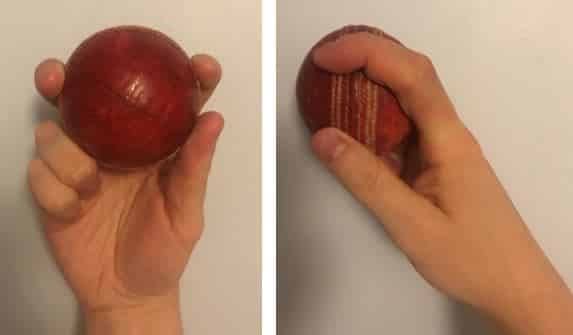
Learning the correct off-spin grip is the first step towards becoming an effective off-spinner. The grip helps you control the ball, generate finger spin and make the delivery turn after pitching. A good grip also gives you the foundation to develop variations such as the arm ball, topspinner and doosra.
Off-spin bowling is mainly a finger-spin technique. A right-arm off-spinner usually turns the ball from the off side towards the leg side of a right-handed batter. To achieve this movement, you need suitable finger placement, a relaxed wrist and a controlled release.
This guide explains how to hold a cricket ball for off-spin bowling, how to release it, common mistakes to avoid and practical drills to improve your control.
How to Hold the Ball: The Correct Off-Spin Grip
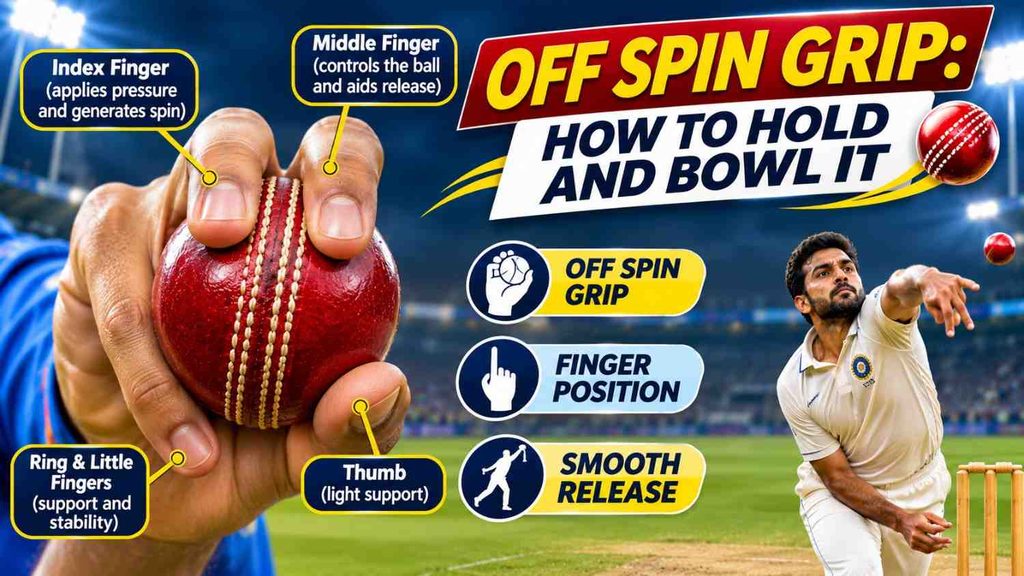
A conventional off-spin grip uses the index and middle fingers to hold and control the ball. The thumb and other fingers provide support and help maintain a comfortable grip.
Follow these steps to learn the basic technique.
Step 1: Position Your Index and Middle Fingers
Place your index and middle fingers on top of the ball, spread apart across the seam. Keep them relaxed so they can work together during the release.
The index finger helps apply pressure and generate spin. The middle finger also plays an important role in controlling the ball and producing rotation.
The exact finger position can vary between bowlers. Start with a comfortable grip and adjust the finger spread to suit your hand size and bowling technique.
Pay attention to the seam orientation as well. Some coaching methods use an angled seam position, but there is no single angle that every off-spinner must follow. A coach can help you find a position that supports a consistent release.
Step 2: Position Your Thumb
Rest your thumb lightly against the underside or side of the ball, depending on your grip.
It should provide support without gripping the ball too tightly. Avoid using excessive thumb pressure because the main spinning action comes from the fingers working with the wrist and forearm.
Step 3: Keep the Ball Away from Your Palm
Do not press the ball deeply into your palm. It should rest mainly on your fingers, leaving enough room for comfortable finger movement.
This position gives your fingers more freedom to work across the ball. A relaxed grip also makes it easier to release the delivery smoothly.
Step 4: Find a Comfortable Finger Spread
Spread your index and middle fingers enough to control the ball comfortably. The ideal distance depends on your hand size and bowling technique.
Do not force an unusually wide grip. You should be able to hold the ball securely while keeping your fingers relaxed.
Practise with different finger spreads and choose the position that gives you the best combination of comfort, control and consistent release.
Off-Spin Grip: Finger Position and Ball Control
The index and middle fingers play important roles in generating off-spin. The index finger helps apply pressure across the seam, while the middle finger contributes to controlling the ball and producing rotation.
In conventional off-spin technique, the middle finger is generally described as the last finger to contact the ball immediately before release. However, the pressure and contribution of each finger can vary between bowlers.
A research paper published in 2018 examined different finger-spread angles using a smart cricket ball. The study involved one amateur off-spinner who bowled 10 deliveries each with narrow, standard and wide grips. The standard grip performed better across several measured parameters, including spin rate and peak power. However, some parameters favoured the wide grip. The researchers concluded that further research was needed.
Therefore, the study does not establish one ideal finger-spread angle for every bowler. The practical lesson is simple: start with a comfortable grip and focus on producing a repeatable release.
| Part of the hand | Main purpose |
| Index finger | Helps apply pressure and generate spin |
| Middle finger | Helps control the ball and contributes to the final release |
| Thumb | Provides light support |
| Ring finger | Helps support and stabilise the ball |
| Little finger | Helps maintain a comfortable grip |
These are general roles. The exact position and pressure of each finger can vary between bowlers. The index and middle fingers work together with the wrist and forearm to generate spin.
How to Bowl Off-Spin with the Correct Grip
A good grip is only one part of successful spin bowling. Your run-up, body position, wrist movement and follow-through also influence the delivery.
1. Start with a Balanced Run-Up
Use a short, controlled run-up. You do not need a fast approach to bowl effective off-spin.
Your run-up should help you reach the crease with balance. Avoid taking too many steps or rushing towards the delivery.
2. Maintain a Stable Bowling Action
Keep your head steady and your body balanced as you approach the crease. Your front arm can help guide your movement towards the target.
A repeatable action makes it easier to control line, length and spin.
3. Coordinate Your Wrist and Fingers
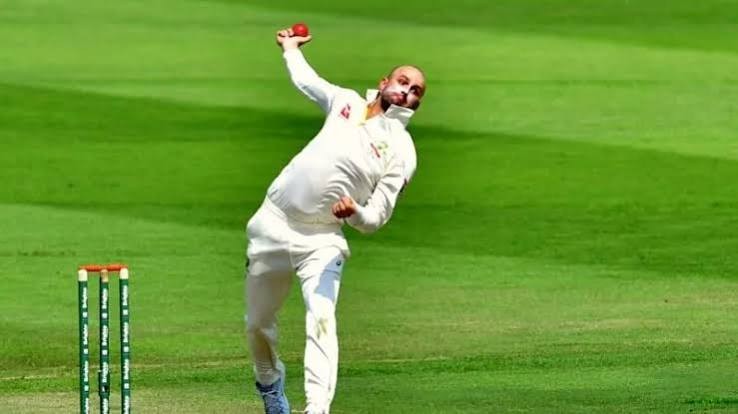
As your bowling arm comes over, coordinate your wrist, forearm and finger movements. Your index and middle fingers work across the ball to generate rotation.
Do not rely only on a forceful wrist twist. The fingers, wrist and forearm work together to produce the spin.
4. Release the Ball Smoothly
At release, allow your fingers to work across the ball. The index finger helps apply pressure and spin, while the middle finger also contributes to the final release.
The precise contact and pressure pattern can differ between bowlers. Avoid throwing the ball or forcing an exaggerated flick. A smooth release gives you better control over the direction and amount of spin.
5. Complete Your Follow-Through
After releasing the ball, allow your bowling arm and body to continue towards the target. Finish in a balanced position rather than stopping suddenly.
A complete follow-through helps maintain rhythm and control.
Common Off-Spin Grip Mistakes to Avoid
Beginners often struggle to generate turn because of small problems with their grip and release.
Holding the ball too tightly: A tight grip restricts finger movement. Relax your hand and allow the ball to leave your fingers naturally.
Pressing the ball into the palm: This reduces the freedom of your fingers. Keep the ball resting mainly on your fingers.
Keeping the fingers too close: A very narrow grip can make it difficult to apply pressure across the seam. Experiment with a comfortable finger spread.
Using too much thumb pressure: The thumb should support the ball rather than control the main spinning action.
Focusing only on turn: Trying to spin the ball as hard as possible can affect accuracy. First develop a repeatable line and length, then gradually improve the amount of turn.
Changing the grip too frequently: Give one grip enough practice before making adjustments. Frequent changes can make your release inconsistent.
If you are struggling to maintain control while changing your grip or bowling action, practise with guidance from a qualified cricket coach.
Best Drills to Improve Your Off-Spin Grip
Regular practice helps you develop finger strength, control and a consistent release. Try these simple drills during training.
1. Finger Spin Practice
Stand a short distance from a partner or target. Hold the ball with your normal off-spin grip and practise releasing it with a controlled finger action.
Focus on the rotation rather than speed. Repeat the drill until you can produce a similar release several times.
2. One-Step Bowling Drill
Start close to the crease and bowl using just one step. This reduces the effect of your run-up and allows you to concentrate on the grip, wrist position and release.
Aim at a consistent target area.
3. Target Bowling Drill
Place a marker on a good-length area of the pitch. Bowl several deliveries and try to land the ball near the marker.
Record how many deliveries reach the target. This helps you measure improvement in accuracy.
4. Seam Rotation Practice
Release the ball gently in front of you and observe its rotation. Try to produce a consistent spin direction without forcing your fingers.
This drill helps you understand how your grip affects the ball.
How to Develop Off-Spin Variations
Once you can bowl a controlled stock delivery, you can begin learning variations. Do not rush into them before mastering the basic off-break.
| Variation | Main feature |
| Arm ball | Travels with little or no sideways turn |
| Topspinner | Produces forward rotation and can create extra bounce |
| Doosra | Turns in the opposite direction to the stock off-break |
Carrom ball: This delivery is released by flicking the ball with the fingers. It is a separate finger-flick technique and should not be confused with the conventional off-spin grip. Its direction of turn depends on the bowler’s release. It should not be treated as an exclusively off-spin delivery.
The doosra is designed to turn in the opposite direction to the stock off-break. Its legality depends on the bowler’s action. Under ICC international regulations, a bowling action is classified as illegal when the bowling elbow extends by more than 15 degrees between the bowling arm reaching the horizontal and the release of the ball.
A doosra is not automatically illegal. The bowler must deliver it within the permitted bowling-action regulations.
Practise each delivery under the guidance of a qualified coach. Keep your stock ball accurate before adding more variations.
Conclusion
A good off-spin grip gives you the foundation to bowl with control, accuracy and turn. Keep the ball resting mainly on your fingers, maintain a comfortable gap between the index and middle fingers, and avoid gripping it too tightly. Focus on a smooth release that combines finger movement with wrist and forearm action.
There is no single finger spread or seam angle that suits every bowler. Find a comfortable position that gives you control and a consistent release. Do not expect to master off-spin in a single practice session. Work on your grip, repeat your bowling action and practise with a clear target.
Once your stock delivery becomes consistent, you can begin developing variations such as the arm ball, topspinner and doosra. With patience and regular coaching, you can build the control needed to become a more effective off-spinner.
Frequently Asked Questions
Place your index and middle fingers on top of the ball, spread apart across the seam. Rest your thumb lightly against the underside or side of the ball, depending on your grip. Keep the ball away from your palm and adjust your finger spread to suit your hand size and bowling technique.
Both the index and middle fingers play important roles. The index finger helps apply pressure and generate spin, while the middle finger contributes to controlling the ball and producing rotation. In conventional off-spin technique, the middle finger is generally described as the last point of contact before release. The exact pressure and contribution of each finger can vary between bowlers.
The ball should not be pressed firmly into the palm. Keep it resting mainly on your fingers so they can move freely during release.
Start with a relaxed grip, practise finger rotation and work on a consistent release. Use short-distance drills before moving to a full run-up. Accuracy should come before maximum turn.
An off-spin grip mainly uses the index and middle fingers to generate finger spin. A leg-spin grip relies more on wrist action and the ring finger to create rotation.